You find out on Monday morning. Your lead designer is sick. The client deck is due Friday. You have no backup plan, no coverage note, and a client call at 2pm.
This is not bad luck. It is a capacity planning failure. It happens to most agencies at least twice a month.
Here is what nobody measures: the project cost of that one absence.
The math your agency is skipping
An unplanned day off from a $150/hr billable team member costs roughly $1,200 in lost capacity. That is not the real number.
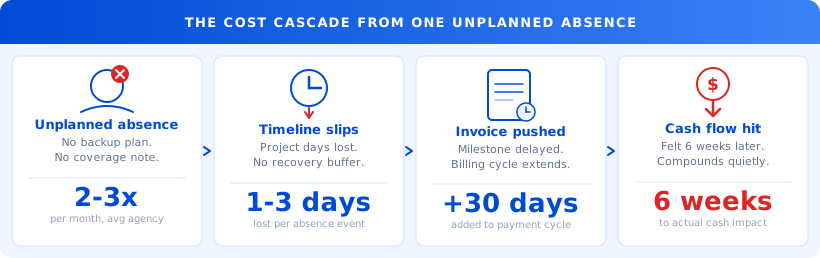
The real damage looks like this: the project timeline slips by a day, the milestone moves to next week, the invoice gets pushed by 30 days, and your cash flow takes a hit you will feel in six weeks.
For a 10-person team with two client-facing absences per month, that is 50 to 80 hours of capacity loss. At typical agency rates, that is $7,500 to $12,000 in delayed billing every month. Most never track it because they file it under "stuff happens," not as a measurable business cost.
Why you do not see it coming
Most agencies handle leave in one of three ways:
- A Slack message: "Hey, sick today, back tomorrow."
- A shared Google Calendar that is three weeks out of date.
- A WhatsApp group where half the team has notifications off.
None of these give your project manager a real-time view of who is available today. None of them connect to your project timeline. None of them trigger a coverage review.
You are making staffing decisions with stale data, every single day.
When you ask why a project ran over, the honest answer is often not scope creep. It is accumulated capacity loss that was never accounted for.
The signals you are probably ignoring
If any of these sound familiar, you have a leave-visibility problem:
- Your PMs find out about absences on the morning they happen.
- You have sent at least one "running slightly behind" client email that traced back to someone being out.
- You invoice on milestone and regularly push invoices by a week or more.
- You have no report showing how many days were lost to leave last quarter.
- Your capacity plan for a 6-week project has no leave buffer built in.
Each item on that list is a symptom of the same root issue: leave data lives somewhere that has no connection to your project data.
What tracking leave actually means for an agency
Leave management at most agencies means HR compliance: who took how many days, is it within the allowed limit, did they submit the form.
That is the wrong frame entirely.
For an agency, leave management should answer three questions on demand:
- Who is unavailable today, and what is their active project load?
- If they are out tomorrow, which milestones are at risk?
- How much capacity did we lose last month, and what did it cost?
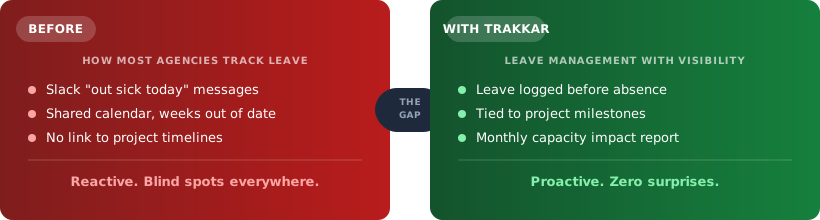
The attendance management data is the starting point. You need to know who is in, who is not, and whether that absence was planned or a surprise. That is a different data point from knowing headcount on a calendar.
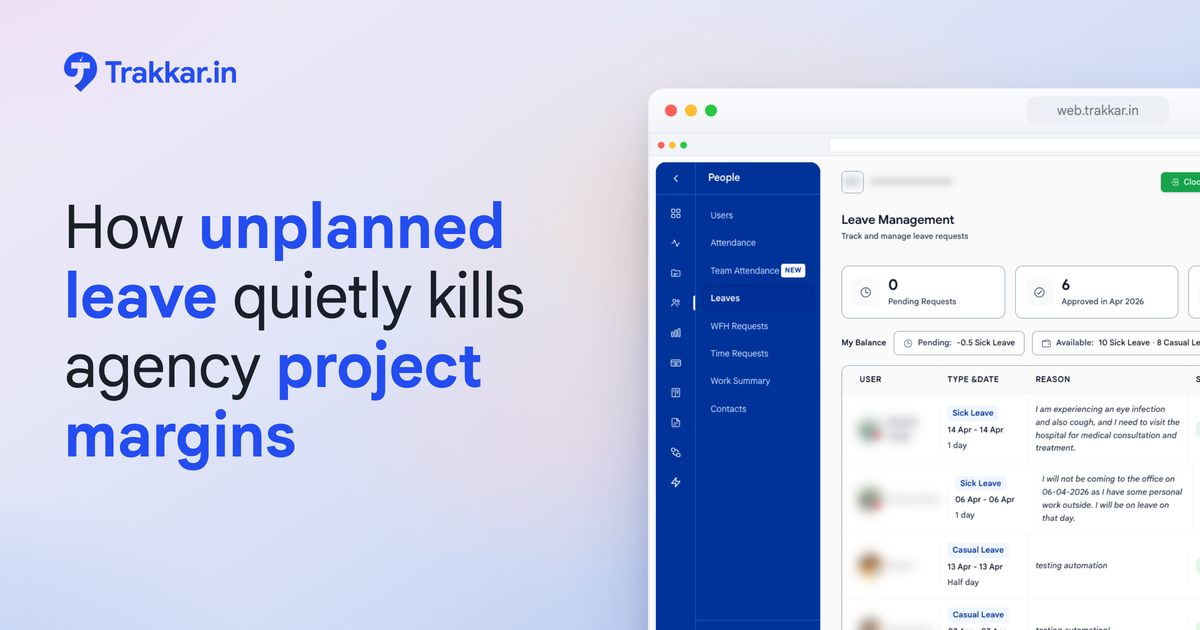
The second layer is leave management: who has requests in for the next two weeks, who is running low on their allowance and therefore likely to take casual days, and which projects are running during that window.
The third layer is project and task data. If your lead developer is out Friday and the sprint closes Friday, your PM needs to know that today, not Thursday evening.
When you can answer those three questions on demand, unplanned leave stops being a crisis and becomes a manageable variable.
What it looks like at a real agency
Consider a design and content agency with eight people: three designers, two copywriters, one project manager, one ops lead, one founder.
In a typical month, they lose four unplanned absence days across the team. That sounds small.
Two of those days belong to their senior designer, who is on three active client projects. Each project bills on milestone delivery. Two milestones slip by one week each.
That is two invoices, totaling $8,400, pushed out by 30 days.
On 30-day payment terms, the actual cash delay is 60 days from when the work was done. The work happened in week 2. The invoice is now due in week 10.
The ops lead notices the cash flow dip in week 11. By then, she has already committed to two new project starts that assumed the $8,400 would land on time.
"We started logging leave impact after one bad quarter. It changed how we plan project buffers entirely."
None of this was anyone's fault. None of it was tracked either.
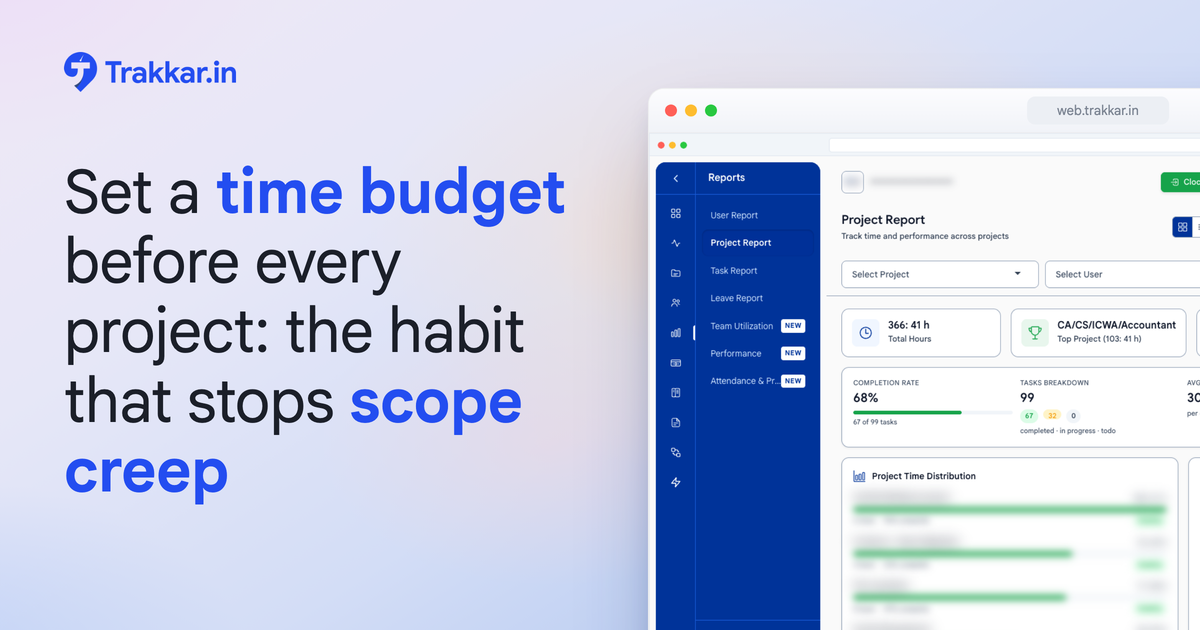
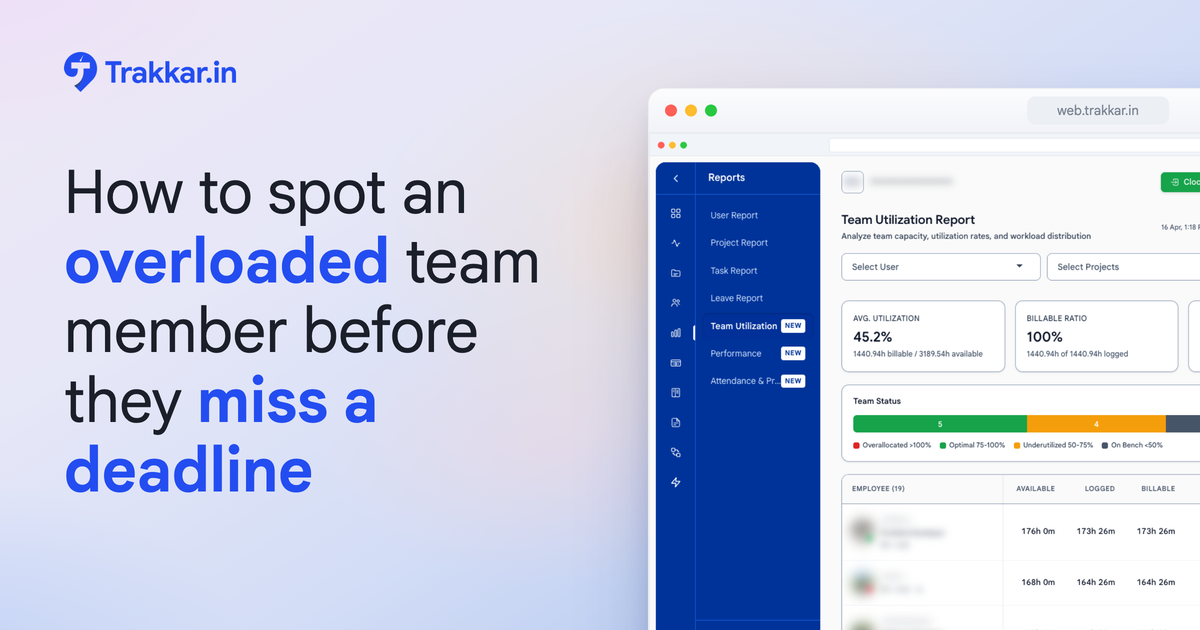
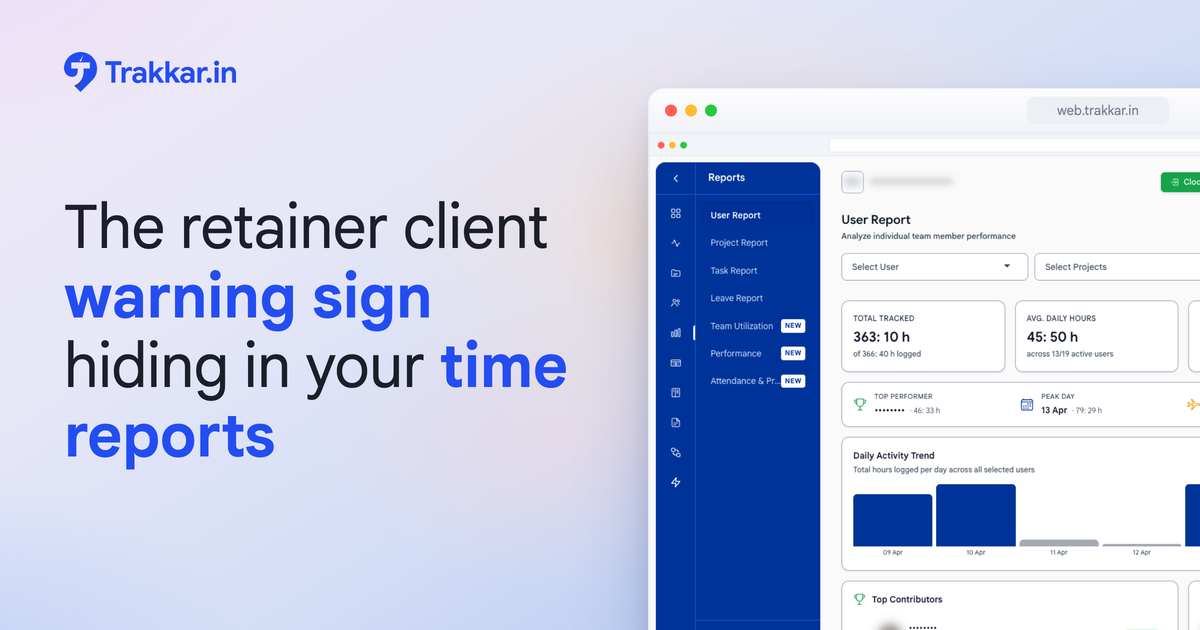
For the full picture of how capacity loss shows up across projects, the reports and analytics view breaks out absence impact by project, team member, and month. That one report replaces the guesswork that normally happens during end-of-month billing reviews.
What to do this week
You do not need a new process. You need to close the visibility gap.
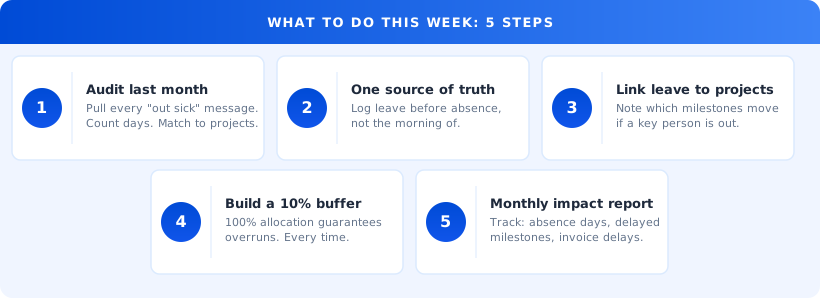
Step 1: Audit last month's absences. Pull your Slack or calendar for any "out sick" or "taking a day" messages from the last 30 days. Count the total days. Match each day to the active projects that person was on. Write down the dollar value of any milestones that moved. That number is your baseline, and it will surprise you.
Step 2: Set up one source of truth for leave. Pick a single place and require everyone to log leave there before they are out, not on the morning of. You cannot plan around data you do not have. This change alone closes the biggest part of the visibility gap.
Step 3: Connect your leave calendar to your project plan. For every project with a tight deadline, add a note: if this person is out in week 4, which tasks move? This takes 10 minutes per project and saves hours of scrambling later.
Step 4: Build a 10% capacity buffer into every project. If your team is nominally 100% allocated, you are guaranteeing overruns. A 10% buffer on a 6-week project is three days. That is not slack. That is operational math.
Step 5: Run a monthly leave impact report. Every month, check: total absence days, project delays tied to those absences, invoice delays, and whether your buffer held. This single report will tell you more about your agency's operational health than most dashboards.
Start with one project's audit before running the full portfolio. A single project takes 30 minutes and gives you a concrete number to bring to the next team meeting. Doing all projects at once takes a week and usually does not happen.
With Trakkar's leave management and attendance tracking, you can pull that monthly report in under five minutes instead of assembling it from Slack history and calendar screenshots. The data is already there. You just need it in one place, connected to your projects.
The bottom line
Unplanned leave is not avoidable. A 10-person agency will lose roughly 15 to 20 days per year to illness and personal emergencies. That is the baseline.
What you can control is whether those days hit your team as a surprise or as a planned variable. The difference is visibility. Not more meetings, not more check-ins, just data that lives in one place and connects to your project timelines.
If you want to see how much leave-related capacity loss your agency absorbed last quarter and what it cost in delayed billing, book a 20-minute demo. We will pull the numbers from your team's actual data and walk you through exactly where the gaps are.